Anjouan Casino Licence UK: What It Means
 Available in GB
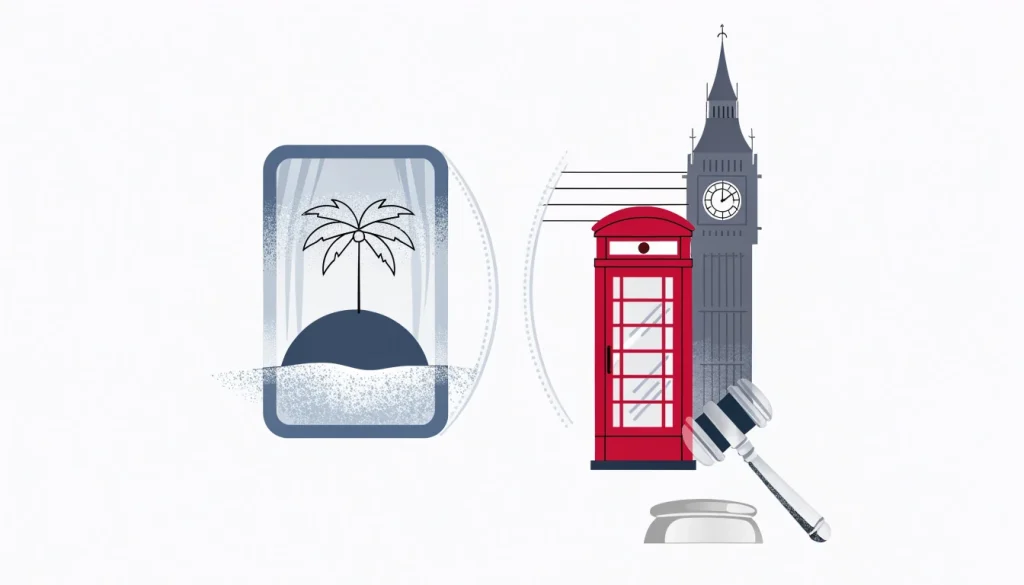
Anjouan licensing does not replace the UKGC permission required to offer remote gambling to people in Great Britain.
Table of Contents
- What an Anjouan Licence Means for UK Players
- How to Check an Anjouan Casino Licence
- Anjouan Online Casinos: The Safeguards You Give Up
- Anjouan Casino Bonuses: Read the Wagering Terms First
- What an Anjouan Gaming Licence Does—and Doesn’t—Settle
- Anjouan Casino Sites: Payout Delays and Limits
- New Anjouan Casinos: Check Before You Trust the Launch
- Anjouan Crypto Casinos and How Payments Can Work
- How to Read Anjouan Casino Reviews with Caution
- Offshore Casinos and Anjouan’s Place Among Licence Jurisdictions
- Casinos
What an Anjouan Licence Means for UK Players
An Anjouan casino licence and permission to offer gambling to customers in Great Britain are not the same thing. The first relates to the operator’s status under Anjouan’s licensing framework. The second is a UK regulatory requirement: a business supplying remote gambling to people in Great Britain needs a licence from the UK Gambling Commission, wherever that business is based.
That distinction is easy to miss when a site displays a licence badge or describes itself as “licensed”. The word can sound like a complete answer, as if one authority’s approval automatically travels with the casino wherever it operates. It does not. An Anjouan licence does not give an operator permission to serve the British market. A site can hold that licence and still lack the UKGC licence required to offer gambling services in Great Britain.
So when you see “Anjouan casino licence”, read it narrowly. It tells you which jurisdiction the operator says has licensed it; it does not establish that the operator is authorised in Britain. The same applies to an online casino that says it is licensed in Anjouan or holds an Anjouan gaming licence. Those phrases describe the claimed foreign licence, not approval from the UK Gambling Commission.
If you are considering an Anjouan-licensed casino from the UK, check its licensing and suitability for your circumstances before choosing. The payout timeframe below is one practical detail to consider.
1. SlotoSport
Payout speed: 1-3 business days
SlotoSport lists a payout speed of 1–3 business days, giving you a stated timeframe to factor into your choice.
2. x3bet
Payout speed: 1-3 business days
x3bet lists a payout speed of 1–3 business days, a useful detail for you to consider when reviewing the operator.
3. NightLuck
Payout speed: 1-3 business days
NightLuck lists a payout speed of 1–3 business days, so you have a stated timeframe to bear in mind.
4. Revery Play
Payout speed: 1-3 business days
Revery Play lists a payout speed of 1–3 business days, which gives you one clear point to consider.
5. Dieselwin
Payout speed: 1-3 business days
Dieselwin lists a payout speed of 1–3 business days, offering you a stated estimate to keep in mind.
6. Chanze
Payout speed: 1-3 business days
Chanze lists a payout speed of 1–3 business days, a practical detail for you to weigh up.
7. NightWin
Payout speed: 1-3 business days
NightWin lists a payout speed of 1–3 business days, giving you a stated timeframe to consider.
8. SpinFormula
Payout speed: 1-3 business days
SpinFormula lists a payout speed of 1–3 business days, which may help you assess whether the stated timeframe suits you.
9. EvoSpin
Payout speed: 1-3 business days
EvoSpin lists a payout speed of 1–3 business days, a useful timeframe for you to note.
10. Jetsetspins
Payout speed: 1-3 business days
Jetsetspins lists a payout speed of 1–3 business days, giving you a stated estimate to factor into your decision.
I used to treat a licence logo as a sort of universal stamp. That was too broad a reading. A licence is tied to the rules and territory of the authority that issued it. For someone in Great Britain, the key legal distinction is whether the operator holds the appropriate UKGC licence to provide its service here. The operator’s headquarters, the wording on its website, or a licence from elsewhere does not replace that requirement.
What the law means for players
The Gambling Act 2005 is aimed at operators supplying gambling services into the UK market. It is not framed as a criminal offence for an individual simply to place a bet on a site that lacks a UK licence. UK law does not specifically forbid British citizens from using gambling services licensed in other countries, and a player who gambles on an unlicensed site does not, on that basis alone, commit a criminal offence under UK law.
That point matters, but it is not the same as saying that every site available to a British player is legally authorised to serve them. The operator’s obligation and the player’s position are different questions. A casino may be reachable from a UK internet connection, accept a registration, or let someone browse its games; those practical details do not turn an Anjouan licence into a UKGC licence.
Best Casino App UK: App or Mobile Browser?
In Great Britain, online gambling is legal through operators that hold the relevant UK Gambling Commission licence. If a non-UK-regulated casino takes customers there without that UK authorisation, the absence of a criminal offence for the player does not make the operator’s service locally licensed. That is the boundary worth keeping in view: the law’s focus on the operator does not remove the licensing requirement for a business targeting or serving the British market.
There is also a difference between “British player” as casual shorthand and the legal territory being discussed. The UK Gambling Commission requirement described here concerns Great Britain: England, Scotland and Wales. The Gambling Act 2005 does not govern Northern Ireland. That does not make an Anjouan licence a UK licence; it means the legal framework is not identical across every part of the United Kingdom.
Reading the claim without overreading it
When a casino says it has an Anjouan online casino licence, the sensible first interpretation is limited: it is presenting itself as licensed by Anjouan. You should not infer from that statement alone that it has permission to operate in Great Britain, or that the UK regulator has approved it. Those are separate regulatory statuses.
Nor does the player’s lack of criminal liability settle every question about using such a site. It says something specific about the legal position of the individual; it does not certify the casino, endorse its terms, or promise that a dispute will be handled under British rules. Those issues depend on other features of the operator and are not answered simply by naming the licence jurisdiction.
An Anjouan licence is not authorization to provide gambling in Great Britain; only a UK Gambling Commission licence grants that legal status.
The headline question, “Anjouan casino licence UK 2026”, therefore has a straightforward legal answer: an Anjouan licence is not authorisation to provide gambling in Great Britain. For that, an operator needs the relevant UK Gambling Commission licence. The player is not committing a criminal offence merely by using an unlicensed gambling site, but that should not be mistaken for the site being legally regulated here.
I find it helps to separate three things that marketing often bundles together: the country issuing a licence, the markets an operator is allowed to serve, and the legal position of the person using the site. They overlap, but they are not interchangeable. Anjouan answers the first question. It does not, by itself, answer the second. And the fact that players are not criminally liable does not change the operator’s licensing obligation.
That is the basic distinction to keep in mind when you encounter Anjouan casinos: foreign licensing is not British permission. The words may sit side by side on a website, but they do different jobs.
How to Check an Anjouan Casino Licence
A licence badge in a website footer is a claim, not a check. I used to see a regulator’s name and assume the important part was settled. It wasn’t. If a casino says it holds an Anjouan casino licence, start with the public register rather than the casino’s own wording. Anjouan Gaming’s official site is at anjouan.gov.sc; look for the register there and search for the operator named on the site.
Casinos Without a UK Licence: What to Check
First, see whether the operator appears in the register at all. A logo, a licence image or a reference number printed on a casino page does not establish that the matching entry exists. If the casino gives you a licence reference, compare it with the register entry where one is shown. Don’t treat a screenshot supplied by the operator as a substitute for the public record. It might be genuine, but you need to be able to check it independently.
Next, look at the expiry date. A listing is not useful reassurance if its validity has run out. Check the date shown in the register and make sure it still covers the time you are assessing the site. If the entry has no clear expiry information, or you cannot locate the operator there, don’t fill the gap with a confident claim on the casino’s website. You may not have enough information to confirm the licence.
Then compare the company name. The legal entity in the public entry should match the company identified in the casino’s own terms or other operator information. A casino brand and a company name can be different, so the difference alone does not prove anything. But there should be a clear connection between them. If the register names one company while the site’s terms name another, and the site does not explain the relationship, pause. You are trying to establish which business the licence applies to, not simply whether the site displays a familiar brand.
I also check whether the information is consistent across the pages I’m relying on. The operator’s terms should identify the company behind the casino; the public entry should give you something you can match back to it. Keep the wording and dates in front of you rather than trusting a search snippet or a copied badge. If the operator’s own claims and the register do not line up, I would not describe that as a verified licence.
How to Check a Licence
Search the Register
Visit anjouan.gov.sc and search for the operator named on the casino site to see if an entry exists.
Verify the Date
Check the expiry date in the register to ensure the licence is currently valid.
Match the Company
Confirm that the legal entity listed in the public register matches the company identified in the casino’s terms.
There is a limit to what a successful check tells you. An entry can support the claim that a particular company has an Anjouan licence, but it does not turn that licence into permission to serve Great Britain. Operators offering gambling to customers in Great Britain need a UK Gambling Commission licence. An Anjouan listing is not one. The two checks answer different questions: whether the operator appears in Anjouan’s records, and whether it is authorised for the British market.
Nor does an Anjouan casino licence settle how strong the casino’s technical or financial safeguards are. Under Anjouan’s framework, operators are not required to have random-number generators tested, undergo audits or keep player funds segregated. That matters because a licence badge can look like a broad seal of approval, while the framework does not require those particular protections. I wouldn’t infer them from the badge.
The same caution applies to complaints. The framework requires operators to respond to complaints within 30 calendar days. A response requirement is not the same thing as a finding in your favour, or an independent decision about the dispute. So when I check a listing, I keep the question narrow: does the public record support the licence claim, and does the named company match? I don’t let a positive answer stand in for protections it does not establish.
If you cannot find an entry, cannot make sense of its expiry date, or cannot connect the listed company to the casino, treat the claim as unconfirmed. That is not a verdict on every aspect of the operator. It is simply the point where I stop taking the site’s word for it. A licence check is useful. It is not a shortcut around the rest of the risk.
Malta MGA Licence and UK Online Casinos: Key Rules
Anjouan Online Casinos: The Safeguards You Give Up
Anjouan-licensed online casinos sit outside the UK Gambling Commission’s oversight. That matters less when a site is advertising a welcome offer and more when you need to stop gambling, limit what you spend, or get help after something has gone wrong. An Anjouan casino licence is not a substitute for the protections attached to a UKGC-licensed operator.
I used to read “licensed” as if it meant “someone will step in if this gets messy”. That was too generous an assumption. A licence from another jurisdiction does not bring a casino into the UK regulatory system, and it does not automatically give you the same tools or routes for help that a UK-licensed site must provide.
GamStop does not cover every casino
GamStop is the UK’s self-exclusion scheme. Casinos outside the UKGC system are not part of it, so registering with GamStop does not block access to an Anjouan casino. That gap is easy to miss if you assume that one self-exclusion decision follows you from site to site.
If you have chosen to self-exclude, treat that choice as a boundary you need to protect yourself. Do not rely on a non-UK-regulated casino to recognise your GamStop status or keep you out. A casino may offer its own account restrictions, but those are not the same as being integrated with GamStop, and you should not assume they apply across other sites.
GamStop Gap
Casinos outside the UKGC system are not part of GamStop, meaning your self-exclusion registration will not block access to an Anjouan casino.
This is not a small technical difference. Self-exclusion is meant to put friction between you and gambling when your own judgement is under pressure. If the scheme does not reach a site, you may need to take additional steps yourself, such as avoiding its website and removing saved payment details. That puts more of the burden on you at exactly the point when relying on willpower can be difficult.
Responsible-gambling tools may be weaker
UKGC-licensed operators must provide mandatory responsible-gambling protections. At a casino outside that system, you give up access to those required tools. An operator may still offer some controls voluntarily, but the presence, strength and operation of those controls should not be treated as equivalent to UK requirements.
This is where careful wording matters. “Responsible gambling tools available” can sound reassuring, but it does not tell you whether you can set a meaningful limit, whether the limit can be changed straight away, or what happens when you ask to close an account. I would look for clear explanations of the controls before depositing, not just a badge or a line in promotional copy.
Rules around responsible gambling and data protection may also be less stringent than those applying to UKGC-licensed operators. That does not prove that every Anjouan casino handles information badly; it does mean you should not assume UK-level standards simply because a site accepts British customers. Read what the operator says about account controls and personal data, and think twice before sharing more information than the process genuinely requires.
Casinos & Safety: Licensing and Player Checks
A polished site is not the same as a strong safeguard. Nor is a licence label. Those are different things.
What happens when the operator fails?
There is a financial risk beyond a disputed game or an account restriction. Anjouan-licensed casinos do not have to guarantee that player funds are kept separate from the operator’s business money. If the operator fails, you may be an unsecured creditor rather than someone whose balance is held apart for return.
That distinction is uncomfortable, but it is worth understanding before you leave money in an account. A displayed balance is not necessarily the same as funds protected in a segregated account. If a business collapses, an unsecured creditor does not have the same assurance as a customer whose money has been ring-fenced.
You also lose access to the UK’s Financial Ombudsman Service and to the mandatory responsible-gambling tools available through the UK system. The Anjouan framework does not require casinos to integrate GamStop or provide an independent dispute-resolution route comparable to UKGC-approved services. So if the site’s own process does not resolve a problem, you cannot assume that a UK regulator or ombudsman will take it up for you.
I would not treat that as a reason to expect every complaint to be ignored. It is a reason to be realistic about who is accountable and which protections are actually available. A casino’s customer-support team may respond, but that is not the same as an independent body with a UK-approved role.
Make the decision with the gap in view
When people search for the best Anjouan online casinos, the comparison often centres on games, offers or how a site looks. Those details do not answer the harder question: what protections would you have if you wanted to stop, needed to restrict your gambling, or could not access money held in your account?
Using a non-UK-regulated casino means you lose access to the UK’s Financial Ombudsman Service and mandatory UKGC responsible-gambling tools.
Before using any non-UK-regulated casino, be honest with yourself about whether the absence of UK safeguards changes the decision. If you rely on GamStop, mandatory controls or a UK route for financial complaints, an Anjouan site will not provide the same framework. You are taking on more responsibility, with fewer protections to fall back on.
That is the trade-off. No badge can erase it.
Anjouan Casino Bonuses: Read the Wagering Terms First
A welcome bonus can look generous until you work out what you must do before any winnings become withdrawable. I used to read the headline and treat the small print as a formality. That was backwards. The wagering rule, the balance it applies to, and the expiry conditions are what tell you whether an offer has any practical value.
Wagering requirements are commonly written as a multiple: the amount covered by the rule must be bet that many times before the bonus or related winnings can be withdrawn. A specialist review has reported offshore welcome offers with requirements of 35x or more. Treat that as a warning to inspect each offer, not as a standard applying to every Anjouan casino bonus. The same multiple can produce very different obligations depending on what the operator says it applies to.
Check what the multiple applies to
A specialist review has also reported offers with a 40x requirement calculated against the bonus and deposit combined, the bonus alone, or the bonus and free spins together. Those are not interchangeable calculations. If the deposit is included, the amount you need to wager can be much larger than if only the bonus counts.
Before opting in, find the precise wording and identify the base amount. Check whether the rule applies to bonus funds, deposited funds, winnings from free spins, or some combination. If the terms do not make that clear, do not assume the more favourable interpretation. A large-looking bonus can be a poor deal when the qualifying balance is larger than you expected.
Also look for restrictions on which games contribute towards wagering, and whether the bonus must be activated before you play. Do not infer those details from an advert. The terms are the part that matters.
Free spins have their own clock
Free spins can come with a separate expiry period. A specialist review has described packages expiring within 24–72 hours, but that is not a guarantee of the timeframe on any particular offer. Check the stated deadline as soon as you accept the spins. If you miss it, unused spins or associated winnings may no longer qualify.
The winnings may also carry their own wagering requirement and a cap on the amount you can withdraw. A specialist review has reported free-spin winnings subject to requirements of 30–50 times those winnings, alongside withdrawal caps of £5–£50. These figures are reported examples, not terms you should expect to find on every site. Read the offer itself and check whether the cap applies before or after wagering.
That cap matters. You could meet a wagering condition and still find that the amount eligible for withdrawal is restricted by the bonus rules. “Free” does not mean unrestricted.
Do
- Calculate the base amount for wagering
- Note the deadline for completing requirements
- Check for withdrawal caps on bonus winnings
Don’t
- Assume the headline bonus is unrestricted
- Trust a banner over the written terms
- Mix bonus funds without understanding forfeiture rules
A quick terms check
Before accepting an offer, I would write down three things: the amount used to calculate wagering, the deadline for completing it, and any cap on bonus-related withdrawals. Then check whether the terms say what happens if you make a withdrawal before finishing the requirement. Some offers can be forfeited when you withdraw or cancel a bonus, so understand that condition before mixing bonus funds with your own balance.
Keep a copy of the terms as they appeared when you opted in. Offers can change, and a banner is not a substitute for the rules attached to your account. If an important condition is unclear, the safest reading is not to accept until you understand it.
The headline is bait. The calculation is the offer.
What an Anjouan Gaming Licence Does—and Doesn’t—Settle
A licence can tell you something about the operator’s claimed regulatory status. It does not tell you who will decide your case if you and the casino disagree. I used to treat those as the same question: if a site had a licence, I assumed there must be an outside body ready to step in. That was a bad assumption.
With casinos operating under an Anjouan gaming licence, the authority does not handle, mediate or adjudicate individual player complaints. Anjouan-licensed casinos also do not offer an independent dispute-resolution route comparable to the services approved for UK Gambling Commission-licensed operators. So if a decision about your account, a payment or a term leaves you unhappy, the licence itself does not create a UK-style appeal process.
That distinction matters. A regulator can set requirements for operators without taking up each player’s case. The existence of a licence is not a promise that an authority will review the evidence, decide which side is right or order a particular remedy. For a player, that can leave the casino as the main place to raise the dispute.
What to do when a dispute starts
Start with a clear written complaint to the casino. Keep the message factual: describe what happened, when it happened, what you believe is wrong and what outcome you are asking for. Save copies of the relevant terms, account messages and any response. I learned the value of keeping a paper trail the hard way; a long chat history is not much use if you cannot find the part that matters.
Under Anjouan’s framework, operators must respond to complaints within 30 calendar days. A response, though, is not the same as an independent decision. If you receive an answer you disagree with, or no answer that resolves the issue, the key limitation remains: the Anjouan authority does not step in to adjudicate your individual case, and there is no comparable independent ADR route attached to the licence.
That is the point worth holding onto. “Licensed” sounds reassuring, but it does not settle a disagreement in your favour, or even send it to someone independent. The process is not the same as having a recognised outside service review the complaint.
Set expectations before you deposit
Before using a casino with an Anjouan licence, think about what you would do if its interpretation of a rule differed from yours. Would you be content to raise the matter with the operator and rely on its response? If not, the lack of an independent route is not a small detail to discover after a dispute has begun.
Dispute Resolution
An Anjouan licence does not provide an independent dispute-resolution route comparable to UKGC-approved services.
I would not treat a licence badge, a polished support page or a quick first reply as proof that a complaint can be escalated. Those things may affect how easy it is to contact the casino, but they do not change who has authority to decide the case. Nor does having a complaint mean the regulator will take it over.
Keep expectations plain: the operator is the first place to complain, and the licence does not provide a UKGC-comparable independent appeal. If that leaves you uneasy, take that seriously before playing. Better to know the limits upfront.
Anjouan Casino Sites: Payout Delays and Limits
A balance on screen is not the same as money in your bank account. With an Anjouan casino site, the withdrawal stage can bring its own wait, even after a win has been approved.
Published estimates differ: some say withdrawals can arrive within 24 hours to five business days, while other accounts warn that the process may stretch to three or four weeks. That gap matters. A quick estimate is not a promise, and there is no UK regulatory clock compelling a non-UK-regulated casino to meet a particular payout deadline.
Before you request a withdrawal, read the payment terms for processing times and any steps that can pause a request. Keep copies of the relevant terms and messages, and note when you submitted the request. If the stated timeframe passes, ask the casino for a clear status update in writing. It is easier to follow a delay when you have a record.
Limits can change the shape of a payout, too. A specialist review has reported that some non-UK-regulated casinos set daily, weekly or monthly withdrawal caps. If a cap applies, a large win may have to be paid in instalments rather than in one transfer. The remaining balance could therefore take longer to reach you, even if each individual payment is processed promptly. Check the cashier terms for caps before treating a displayed win as immediately available cash.
I used to focus on the win and skim the withdrawal page. That was backwards. The practical question is not only how much you can withdraw, but how quickly, in what-sized payments, and what happens if a request is delayed.
Read those conditions before depositing, not after a win. Save the version you saw, because the terms shown in your account are the ones you may need to refer back to. A payout can be split or delayed; plan around the rules the casino sets, not the number on your balance.
New Anjouan Casinos: Check Before You Trust the Launch
A fresh casino launch can look polished before anyone has had time to learn how it handles real problems. I’ve learned not to treat a licence badge in a footer as proof on its own. For a site claiming an Anjouan casino licence, look for the operator in Anjouan’s public register and compare the entry with the details on the casino’s own site.
New Casino Check
- Search for the operator in the Anjouan public register
- Verify the licence expiry date
- Match the registered company name to the casino’s terms
- Review the cash-out and verification requirements
The company name matters. A licence entry for a different legal entity does not establish that the brand you are looking at is covered. Check that the registered company and the operator named in the casino’s terms match; don’t assume a shared logo, group name or similar wording closes the gap. Check the expiry date as well. A listing that is expired, unclear or hard to match is a reason to pause, not a detail to wave away because the site is new.
That check is about whether the claim can be matched to a register entry. It does not tell you how the operator will treat a withdrawal, or establish that a particular launch has been independently verified. I’m not naming a new casino as cleared here.
Pay attention to the cash-out rules before you deposit. Some specialist reviews report that offshore operators may ask for notarised documents or a video call before releasing a withdrawal. Those are reports about possible practices, not a standard you should assume every site follows. Still, find out what verification the terms permit and whether the operator explains how to complete it. If the requirements appear only after you try to withdraw, the launch-day shine won’t help.
A new brand can have little public track record, so save the licence details and the relevant terms as they appear when you sign up. If the company name does not match, the register entry has expired, or the withdrawal conditions are vague, I would not treat a launch offer as a reason to take the risk. Slow down first.
Anjouan Crypto Casinos and How Payments Can Work
Anjouan-licensed sites may list cryptocurrency alongside card payments, e-wallets and bank transfers. The payment page can look straightforward, but I’d treat the options as a description of what the casino may accept for deposits—not a promise about every stage of a transaction. Offshore operators can also use alternative processors, so the name shown during checkout may differ from the casino’s own.
Crypto has a specific connection to the UK credit-card gambling ban: paying with cryptocurrency can bypass the ban on gambling funded by credit cards. That is a description of how the payment route works, not a sign that the casino is approved to serve customers in Great Britain. A crypto option does not change the operator’s regulatory status or settle whether using its service is right for you.
There is another detail that is easy to miss. A casino may accept a method for deposits without offering that same method for withdrawals. Before sending funds, check the cashier’s withdrawal rules as well as its deposit options. Look for any stated limits on supported currencies, account requirements or conversion arrangements; if the terms are unclear, don’t assume the casino will sort it out in your favour later.
Crypto also shifts some practical responsibility onto you. Transfers can be difficult or impossible to reverse, and using the wrong address or network can mean funds do not arrive in the account. Keep records of what you send and read the payment instructions carefully. I’d be wary of treating a familiar coin logo as the whole story.
The same caution applies to cards and e-wallets: a logo at deposit does not guarantee the same route is available when you want to withdraw. Check the rules before paying, and take responsibility for understanding the local laws and implications of using an offshore gambling service. Convenience at checkout is only one part of the decision.
Attention: Cryptocurrency payments can bypass the UK credit-card gambling ban, but this does not change the operator’s regulatory status in Great Britain.
How to Read Anjouan Casino Reviews with Caution
A glowing review can tell you that someone liked the games or the sign-up experience. It cannot tell you what will happen if you and the casino disagree. I used to treat a page full of positive comments as reassurance. That was the wrong test. Praise is easy to publish; independent help when a complaint goes nowhere is a different matter.
When reading reviews of Anjouan casinos, look for detail about how complaints are handled. Does the reviewer describe the issue, the casino’s response and how it ended? Or does the piece simply call the site “trusted” and move on? That word is decoration unless the review explains what supports it. Look for accounts that distinguish a quick reply from an actual resolution, too.
The key limitation is that the Anjouan authority does not take up individual player complaints. It does not mediate between you and the casino or decide who is right. So a licence mention in a review should not leave you expecting the authority to step in if a dispute arises.
There is also no independent dispute-resolution route for Anjouan-licensed casinos comparable to the UK Gambling Commission’s approved alternative dispute resolution services. That matters more than a reviewer’s star rating: if the casino’s own complaints process fails to settle the issue, you do not have that equivalent independent channel.
Reviews still have a use. I read them as clues about the questions worth asking, not as a safety certificate. Check whether a review says what happened after a complaint was made, and whether its claims are supported by a clear account rather than broad assurances. A positive experience may be genuine, but it cannot guarantee yours will be the same.
Keep that distinction in view. A review can describe one player’s experience; it cannot create independent protection where none is provided. When the fine print says “help”, find out whose help it means—and what they can actually do.
Offshore Casinos and Anjouan’s Place Among Licence Jurisdictions
Anjouan is one of several jurisdictions associated with casinos operating outside UK Gambling Commission oversight. Malta, Curaçao and Gibraltar are also among the places that may license non-UK-regulated casinos. Seeing those names together can make them look like interchangeable labels. They are not a shortcut to knowing where a casino may legally serve customers.
Curacao casino licence in the UK: what to know
The key distinction is between the place that issues a licence and the market where an operator is allowed to offer gambling. An Anjouan casino licence does not authorise operation in the United Kingdom or in other restricted markets. For customers in Great Britain, operators offering gambling services must hold the relevant UK Gambling Commission licence, whatever country the business is based in.
That is the part I would keep in view when a site puts a foreign licence in large type. It tells you which jurisdiction the operator says oversees it; it does not, by itself, establish permission to serve British customers. A licence name can sound reassuring while answering a narrower question than the one you actually need answered.
The same distinction matters across the wider group of licensing jurisdictions. A casino associated with Malta, Curaçao or Gibraltar is not automatically authorised to serve Great Britain simply because that jurisdiction appears on its paperwork. The UK requirement still applies to operators serving the British market. A foreign licence and a UK operating licence are not substitutes for one another.
So when comparing offshore casinos licensed in Anjouan with sites connected to other jurisdictions, treat the location as market context, not a ranking. It helps identify the licensing framework being claimed, but it does not settle whether the operator can legally serve you in Great Britain. That’s the line.
I would avoid reading “international” or “licensed” as a quiet promise of UK approval. Those words can describe where a business is based or licensed without changing the rules for the market it wants to reach. Different jurisdiction, different question.
What payment methods work best at non-UK-regulated casino sites?
You may find credit cards, e-wallets, bank transfers, cryptocurrencies, and sometimes mobile-phone or prepaid-balance payments. Check the casino’s payment terms before depositing, as withdrawal times and limits vary by method and operator.
Are gaming sites not on GamStop permitted for UK players?
You are not committing a criminal offence under UK law simply by using an unlicensed gambling site. However, operators serving customers in Great Britain need a UK Gambling Commission licence, and sites outside GamStop do not provide that scheme’s self-exclusion protections.
What are non-UK-regulated casinos?
They are online gambling sites that operate without oversight from the UK Gambling Commission, often under a licence from another jurisdiction. A foreign licence, including one from Anjouan, does not authorise an operator to serve customers in Great Britain.
Are Anjouan-licensed casinos safe and fair?
An Anjouan licence alone does not guarantee that a casino is safe or that its games are fair. Anjouan’s framework does not mandate RNG testing, audits, or segregated player funds, and it does not provide an independent dispute-resolution route comparable to UK-approved services.
Casinos

Best Casino App UK: App or Mobile Browser?
A practical look at app access, browser play, phone-friendly games, bonuses and mobile account choices....

Foreign casinos for UK players: licensing and risks
A foreign casino is defined by its regulator, not its location; licensing, withdrawal terms and...

International Casinos for UK Players: What to Check
A practical guide to licensing, bonus conditions, payment trade-offs and withdrawal terms for UK residents...

Pay by phone credit at UK mobile casinos
Phone-credit deposits are charged to a mobile bill or deducted from pay-as-you-go credit, and withdrawals...

Offshore casino sites for UK players: risks and rules
An offshore label says little about oversight, payment reliability or the checks and safeguards available...

Offshore Casinos for UK Players: Checks Before Play
The guide explains licensing, self-exclusion, bonus terms and payout rules that can affect UK players...

British Casinos Not on GamStop: UK Licensing Explained
The guide separates UKGC-regulated casinos from overseas operators and explains what GamStop coverage does—and does...

UK Casinos With No ID Verification in 2026
A simple sign-up does not rule out later checks; UK-licensed operators must establish age and...

Casino sites not registered with GamStop UK: what it means
UKGC-licensed online casinos must participate in GamStop, while sites outside that framework may not block...

No-ID Verification for UK Casino Withdrawals
A practical guide to sign-up checks, withdrawal timing, payment routes and the limits of no-verification...

Casinos Without a UK Licence: What to Check
An overseas licence does not mean UKGC oversight, and safeguards, withdrawal conditions and dispute options...

Casinos That Bypass GamStop: What the Label Means
The label means a casino does not participate in GamStop; it does not establish the...

Curacao casino licence in the UK: what to know
A Curaçao licence identifies an operator’s licensing jurisdiction, but it does not make the site...

Gibraltar casino licences for UK players: what to check
Gibraltar casino sites sit outside UK Gambling Commission oversight, so rankings and licence labels should...

Merkur Casino Online UK: Slots, Demos and Checks
A practical guide to identifying Merkur titles and checking casino access, offers, demos and play...

Most Trustworthy Online Casinos in the UK: How to Check
A practical guide to checking UK licensing records, operator identity, offer conditions and claims about...

No Account Casino UK: What the Label Means
The label describes a route into play, not a promise that every later step or...

Non-Gamban Casinos in the UK: What the Label Means
A site outside Gamban may still pose serious risks, and its status alone says nothing...

Non-GAMSTOP Curaçao Casino Sites and UK Rules
The guide explains how GAMSTOP’s reach in Great Britain differs from Curaçao licensing and why...

Non-GAMSTOP European Casinos: UK Access Explained
GAMSTOP applies to UK-licensed online gambling, so a site's European branding alone does not determine...

Non-UK Licence Casinos: What the Licence Means
A licence reflects the rules of its issuing authority, so its protections and market coverage...

Non-UK Registered Casinos: Regulation Explained
A guide to regulator oversight, GamStop status, payment terms and the limits of licences issued...
Non-UK Regulated Casinos: What the Licence Means
A practical guide to offshore licensing, UK oversight, payment methods and the risks of using...

Non-UKGC Licensed Casinos: Rules and Risks
Understand how licensing, player protections and payment terms differ when a casino operates outside the...

Malta MGA Licence and UK Online Casinos: Key Rules
An MGA licence identifies a Malta regulator’s relationship with an operator, but does not establish...

Online Casino No Registration UK: What It Means
Browser access can avoid an app download, but it does not by itself remove an...

Online casino with no sister sites in the UK
Casino brands may share ownership, technology or related products without making their offers or accounts...

Online slots not on GamStop: what it means
GamStop participation is tied to the casino, while game names and bonus claims do not...

Safe Online Casinos in the UK: What to Check
A practical way to verify the exact website, licensing details, payments, bonus terms and safer-play...

Trusted casinos not on GamStop UK: what to check
A practical look at licensing, payments, bonuses and the protections that may be absent beyond...

Trusted UK Casino: How to Check a Gambling Licence
A practical look at licensing, regulatory records and the terms that shape casino access, payments...

USA Casinos for UK Players: What to Check
An American casino label does not show whether an operator can serve customers in Britain...

VPN-Friendly Casinos in the UK: Rules and Risks
A VPN may change how a casino sees a connection, but it does not settle...