Mr Luck Registration and Account Guide
 Available in GB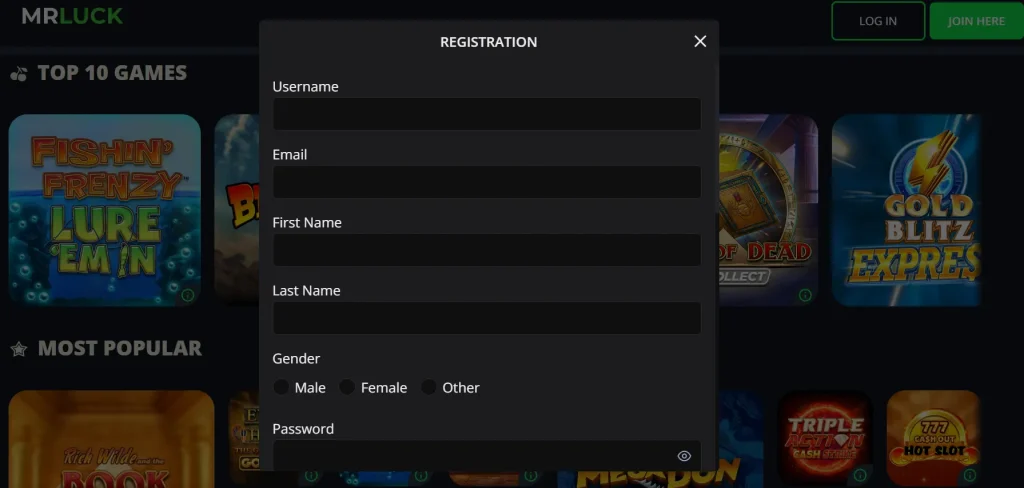
UK account guide
A Mr Luck account is available to UK residents aged 18 or over. Registration is more than choosing a username: the details you provide must be accurate, the account must be for your own use, and Mr Luck verifies customer identity and age. UK remote-gambling rules also require core identity information to be verified before gambling, and new customers are prompted to consider a financial limit during registration or before the first deposit. The practical sequence is therefore eligibility first, accurate account details second, verification third, then deposit readiness. If automated checks do not complete successfully, documentary verification can follow before you are able to deposit.
Table of Contents
- Who can open a Mr Luck account?
- The registration sequence in practical order
- Why identity verification happens before gambling
- The financial-limit prompt before your first deposit
- Use a payment method that belongs to you
- Automatic checks versus document requests
- What can delay account readiness?
- Registration is not a promise of instant approval
- How licensing connects to the account process
- What to have ready before opening a Mr Luck account in the UK
- Mr Luck Registration and Account Guide
Who can open a Mr Luck account?
Mr Luck’s current terms say that only UK residents may open accounts, deposit funds, play games or place bets through the service. The minimum age is 18. Registration is for an individual acting on their own behalf, so the account cannot be opened for another person or treated as a shared household account.
The registration information must also be correct. The terms specifically refer to details including your name, date of birth, postal address and email address. Those details are not just profile information: they form the basis of the identity checks that sit between registration and gambling access. A mismatched date of birth, old address or inconsistent spelling can therefore create friction later even when the initial form itself appears simple.
Mr Luck also requires a valid bank account, debit card or approved alternative payment method belonging to the customer. The broader payment rules prohibit another person’s card, bank account, e-wallet or other third-party funding source. If you want to understand the cashier side before registering, see the Mr Luck payment methods guide.
The registration sequence in practical order
- Confirm eligibility. You need to be a UK resident and at least 18 years old.
- Enter your real personal details. Use your current legal name, date of birth, residential address and an email address you control.
- Create and protect your login. Treat the account as personal. Do not share credentials or allow another person to use the account.
- Complete identity checks. Mr Luck states that it verifies age and identity, using automatic checks where possible.
- Review the financial-limit prompt. Great Britain remote-gambling rules require new customers to be prompted to set a financial limit during registration or before the first deposit.
- Add only a payment method in your own name. Payment ownership can be checked and third-party payment methods are prohibited.
- Deposit only after the account is ready. If automatic age and identity checks are not completed satisfactorily before your first deposit, Mr Luck says it will require additional identification documents before you can deposit.
This sequence is useful because it separates what is universal from what is conditional. Every customer must provide core identity information and be verified, but not every customer necessarily follows the same documentary route. The dedicated Mr Luck KYC guide explains the escalation path and the document examples in the current terms.
Why identity verification happens before gambling
The UK Gambling Commission’s customer identity condition requires remote licensees to obtain and verify information establishing a customer’s identity before that customer is permitted to gamble. At minimum, that information includes name, address and date of birth. The rule is designed to move basic identity verification earlier in the customer journey instead of leaving it until somebody asks to withdraw.
Mr Luck’s own terms follow that approach. Where possible, the operator says it verifies age and identity automatically from registration information. It may use independent credit reference agencies for those checks, but states that this is not a credit check and should not affect the customer’s credit rating. If the automatic process does not complete satisfactorily before the first deposit, documents are required before depositing is enabled.
The distinction matters for planning. A successful form submission is not the same thing as unrestricted account use. Registration creates the account relationship, while verification determines whether the account is ready to progress to depositing and gambling. That is why entering accurate details at the start is more useful than trying to correct inconsistencies after a check has failed.
The financial-limit prompt before your first deposit
Great Britain’s remote-gambling standards changed on 31 October 2025 so that new customers must be prompted to set a financial limit as part of registration or at the point of the first deposit. The Gambling Commission also requires limit-setting facilities to be available from registration onward. Setting a limit is presented as the default choice, although a customer can actively decline to set one.
This prompt is worth treating as an account-setup decision rather than an interruption. A useful limit should reflect the amount you can afford to lose within the period you choose, not the maximum amount the system will accept. If you set one, check how the operator defines the limit and when a requested change takes effect.
Mr Luck also provides deposit-limit functionality as part of its safer-gambling controls. The UK rules apply across licensed remote gambling, while the controls you see in the Mr Luck interface are the operator’s implementation of that wider framework. The important point at signup is that financial-limit consideration now belongs near the beginning of the account journey, before routine depositing starts.
Use a payment method that belongs to you
Mr Luck’s terms are explicit that deposits and withdrawals must use valid payment methods belonging to the customer. Another person’s debit card, bank account, e-wallet or digital payment account is not permitted even if that person has given permission. Business or company payment methods and credit cards are also prohibited under the current terms.
This is partly an account-security issue and partly a verification issue. The operator may check ownership of the payment method and the source of funds. If a method belongs to somebody else, the mismatch can create a compliance problem that is much harder to resolve than simply using your own supported method from the outset.
For that reason, the sensible first-deposit checklist is short: make sure the account name and payment-method ownership align, confirm the method is currently offered in the cashier, and avoid assuming that a payment option mentioned in an old review is still available. The payments guide covers the current verified cashier information in more detail.
Automatic checks versus document requests
| Stage | What happens | What you should do |
|---|---|---|
| Registration | You submit core personal details. | Use accurate, current information that matches your identity records. |
| Automatic verification | Mr Luck attempts age and identity checks using the registration data. | Avoid duplicate accounts or inconsistent spellings and addresses. |
| Document escalation | If automatic verification is insufficient, documents can be requested. | Follow the request shown in your account rather than uploading unrelated files. |
| Payment checks | Ownership and source-of-funds evidence can be requested where required. | Use payment methods and funds that belong to you. |
| Ongoing account use | Details may need to remain current and additional checks can occur when legally required. | Update changed personal or financial information promptly. |
Not every account follows every row in the same way. Mr Luck’s terms give examples of possible documents, but they are not a universal fixed checklist for every customer. That is an important boundary: prepare to verify your identity, but do not assume you will be asked for exactly the same evidence as another player.
What can delay account readiness?
The most avoidable problems are inconsistencies that make automated verification harder. Examples include registering under a shortened name while your payment method uses your full legal name, using an old address, entering a date of birth incorrectly, or attempting to fund the account with a third-party payment method. None of those problems is improved by opening a second account, because Mr Luck’s account rules are built around one personal account and verified identity.
A second source of delay is waiting until a payment or withdrawal becomes urgent before responding to an information request. UKGC rules say operators should request additional verification information promptly when it is needed and should not wait until withdrawal if the information could reasonably have been requested earlier. Mr Luck’s terms also allow further checks relating to identity, payment ownership and source of funds.
If an account check appears unresolved, use the operator’s support channels rather than repeatedly retrying the same transaction. Mr Luck provides live chat and email support. Keep the question specific: identify the check or account message you can see and ask what information is still outstanding.
Registration is not a promise of instant approval
Opening an online account can feel instantaneous because the form itself is short, but regulated account access depends on successful verification. Mr Luck does not promise that every new customer will pass automated checks immediately, and the UK rules require identity verification before gambling. The practical expectation should therefore be a sequence, not an instant-approval guarantee.
That also means a customer should not make time-sensitive plans around a first deposit or withdrawal before the account is fully usable. If documentary checks are requested, follow the instructions in the account and provide only the information actually requested. For the document examples and source-of-funds distinction, move to the verification guide.
How licensing connects to the account process
Mr Luck is operated by Jupiter Gaming Limited under a UK Gambling Commission remote casino licence. That matters for account setup because the identity, age-verification and safer-gambling requirements described above are not optional extras added only by the brand; they sit within the regulatory framework for licensed remote gambling in Great Britain.
The licence page explains the operator record, regulatory status and what a UKGC licence does and does not tell you about the casino. If regulatory status is part of your decision before registering, read the Mr Luck licence before depositing.
What to have ready before opening a Mr Luck account in the UK
Start with accurate personal details, proof that you are a UK resident aged 18 or over, and a payment method in your own name. Expect identity verification before gambling and be prepared for a document request if the automatic check is not sufficient. Treat the financial-limit prompt as part of setup rather than something to dismiss automatically, because it is designed to help establish a budget before depositing. If you keep those pieces aligned from the beginning, the account journey is clearer and you are less likely to create avoidable verification problems later.